UPVC Painting : A Comprehensive Guide for Professionals and DIY Enthusiasts.
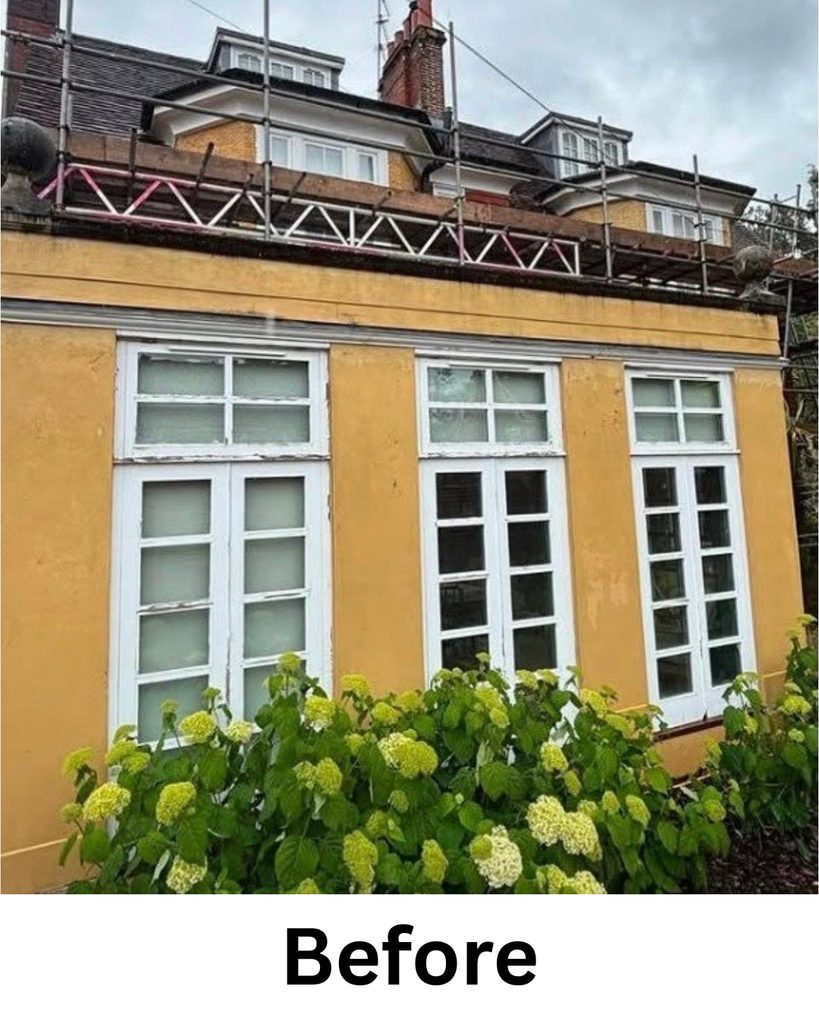
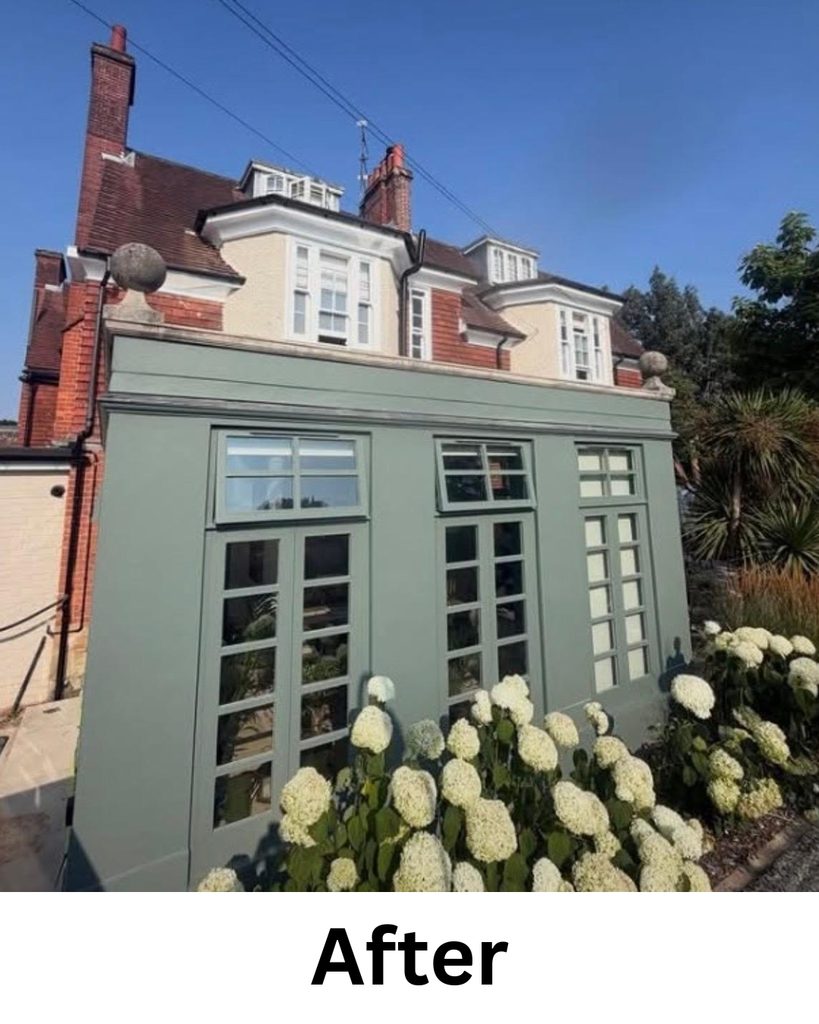
UPVC that is starting to fade can date and devalue a property fast. The good news is modern coatings let you refresh windows, doors, fascias, soffits, and conservatory frames without costly replacement. Done right, a specialist system will look factory-fresh and last years. Done badly, it will detach from the UPVC surface within months.
This is a comprehensive guide for repainting tired UPVC windows and doors. You will learn how to create a total make over to improve the value of your home, the right surface prep sequence, whether you need primer, what to avoid, and the best coatings for our changing UK weather. We compare a top professional option with a leading DIY-friendly alternative, then cover colour and gloss choices that are popular on our homes.
UPVC Painting. Is it the Best Optionfor your project?
Painting UPVC is recommended when:
The substrate is sound with no warping, cracks, or failed seals.
You want a colour update to unify elevations, boost kerb appeal, or match new extensions.
Frames are structurally fine but cosmetically tired, chalky, or stained.
It is not ideal when the UPVC is brittle, distorted, oil-soaked from failed gaskets, or movement at joints. In those cases, consider repair or replacement first.
Common reasons homeowners repaint include modernising 1990s white, aligning with darker rooflines and bi-folds, or choosing heritage tones. Current popular colours include RAL 7016 Anthracite Grey, RAL 9005 Jet Black, RAL 6021 Pale Green and Chartwell Green.
Surface Preparation is Critical to Success
Adhesion is dependent on surface preparation. Follow this three-step sequence:
Clean: Wash with a non-silicone exterior cleaner to remove oil, grease, algae, and other surface contaminants. Rinse well and dry.
De-gloss: Use a fine grade abrasive paper (320 to 400 grit pad) to lightly abrade the surface to remove the surface sheen and any surfactants in the UPVC which rise to the surface. Avoid heavy sanding that can burnish or gouge the plastic.
Degrease: Final wipe with a lint-free cloth and the recommended degreaser. Pay attention to gasket edges and handle areas where silicones and oils build up.
Mask glass and gaskets, remove hardware where possible, and work out of direct sunlight to control drying times.
Do You Need A Primer on UPVC?
It depends on the system:
Selemix Direct (2K) does not need a primer on properly prepared UPVC. It is a two-pack direct-to-plastic coating for professional application.
Bradite One Can is a single-pack, water-based primer-finish that also needs no separate primer.
These multi-surface primer finishes simplify the application process, only one product is required to complete your project, reducing waste.
The Best Systems for Refurbishing UPVC Windows and Doors.
Two routes cover most needs. Professional, maximum durability:
Selemix Direct (2K). A trade-only, two-pack direct-to-substrate system, ideal for UPVC and Metal facades. No primer required on suitably prepared UPVC. Multiple coats can be applied with just 15 minutes between coats, helping you move quickly around elevations. When applied by trained professionals, it typically delivers up to 15 years of service life in most residential settings. Choose sheen to suit the project, with 30% popular on residential and commercial buildings and 50% or 80% used on shopfronts and the retail sector. Selemix Direct can be purchased in 5lt kits including base (4lt) and hardener (1lt) or may be purchased separately.
DIY-friendly, great all-rounder:
Bradite One Can. A single-pack, water-based multi-surface primer-finish for UPVC, masonry, metal, and wood. It needs no separate primer, is low odour, and can be overcoated in 1 hour, making it practical for homeowners and maintenance teams. It is the simplest route when you want one product to protect UPVC profiles, wood or metal trims and adjacent masonry.
Standard household paints like alkyd gloss, masonry paint or vinyl matt emulsions. These lack the adhesion and flexibility for plastics.
Generic aerosol car paints without plastic adhesion technology.
Silicone polishes or waxes before painting. They cause cratering and poor adhesion.
Harsh caustic cleaners that can damage or embrittle UPVC.
If the frames were previously treated with silicone-based products, extend the degreasing stage and consider an adhesion test on a small area.
How Long Will it Last?
Service life varies with exposure. In typical UK residential areas, Selemix Direct, applied by professionals over correctly prepared UPVC, is expected to last up to 15 years. DIY single-pack systems will usually have a shorter maintenance cycle, which can still be excellent value if ease of use is your priority. Coastal locations may need regular cleaning to reduce salts building up regardless of system.
Colour and Gloss Choices
Both Selemix Direct and Bradite One Can are available in RAL, NCS and British Standard colours.
Sheen: 25-30% is most common on residential and commercial properties, 50% and 80% are used for retail and shopfronts where a higher gloss look is desired. Ultra matt finishes 6% are also popular to blend with masonry paints which are typically 4%
Conditions: Aim for a dry day, stable temperature, and shade. Avoid dew-point risk and high humidity.
Application: Brush and mini-roller for DIY systems, or professional spray for Selemix Direct for the smoothest factory-like finish. Mix ratio for Selemix Direct is 4 parts base colour to 1 part 9-070 hardener by volume. Thinner 1-480 is the recommended thinner and may be used for degreasing.
Recoat: Selemix Direct allows 15 minutes between coats. Bradite One Can can be overcoated in 1 hour.
Curing: Avoid aggressive cleaning until fully cured see technical data sheet.
Popular FAQs for Re-Painting UPVC
Is painting UPVC a good idea? Yes, if the frames are sound and you use a proven system compatible with UPVC.
Do you need to prime UPVC? Not with Selemix Direct or Bradite One Can, but ensure the surface is prepared correctly.
Do I need to sand UPVC? Lightly key with fine abrasive, 320 to 400 grit to de-gloss and provide a key for subsequent painting.
How long does it last? Selemix Direct can deliver up to 15 years in most residential areas when professionally applied. Single-pack systems typically have 10 years.
What paint is recommended for UPVC? Selemix Direct for professional applicators; Bradite One Can for DIY and maintenance teams.
What products should I avoid? Standard alkyd gloss paints, vinyl emulsions, silicone polishes, and harsh caustic cleaners on frames.
Which is the best paint for UPVC windows and doors? For maximum durability and speed, Selemix Direct. For DIY simplicity, Bradite One Can.
Why Buy From AVACE?
We stock specialist UPVC coatings with computer-controlled colour mixing, free next-business-day delivery on Bradite One Can and 2-business-day free delivery on Selemix Direct orders. You get competitive pricing, free UK-wide delivery and technical support to help you choose the right system and sheen. If your project also involves cladding panels or shopfront metalwork, explore our cladding paint options for a unified finish: https://avace.co.uk/product-category/roofing-cladding-paints/
Summary
Painting UPVC is beneficial when you respect the substrate. Clean, de-gloss, and degrease, then choose a system built for plastics. For pro-grade longevity and speed, Selemix Direct stands out. For DIY practicality across multiple surfaces, Bradite One Can is a reliable choice. Pick a balanced sheen, consider popular UK colours, and apply in the right conditions.
Need help matching colours or specifying a system?
Contact AVACE for advice, colour matching, and fast delivery www.avace.co.uk or complete a quotation request form for bulk pricing.
For half a century, Nèos has been at the forefront of advanced manufacturing, pioneering the use of superplastic forming to create innovative and complex 3D aluminium, titanium and magnesium components. As a world-leading manufacturer, we specialize in delivering lightweight, high-performance solutions that streamline assembly through reduced part counts.